Table of Contents
1.Scope
2.Environmental Requirements
3.Operating Precautions
4.Installation and Construction Requirements
5.Maintenance and After-sales Service
1.Scope
1.1 Product Classification and Applications
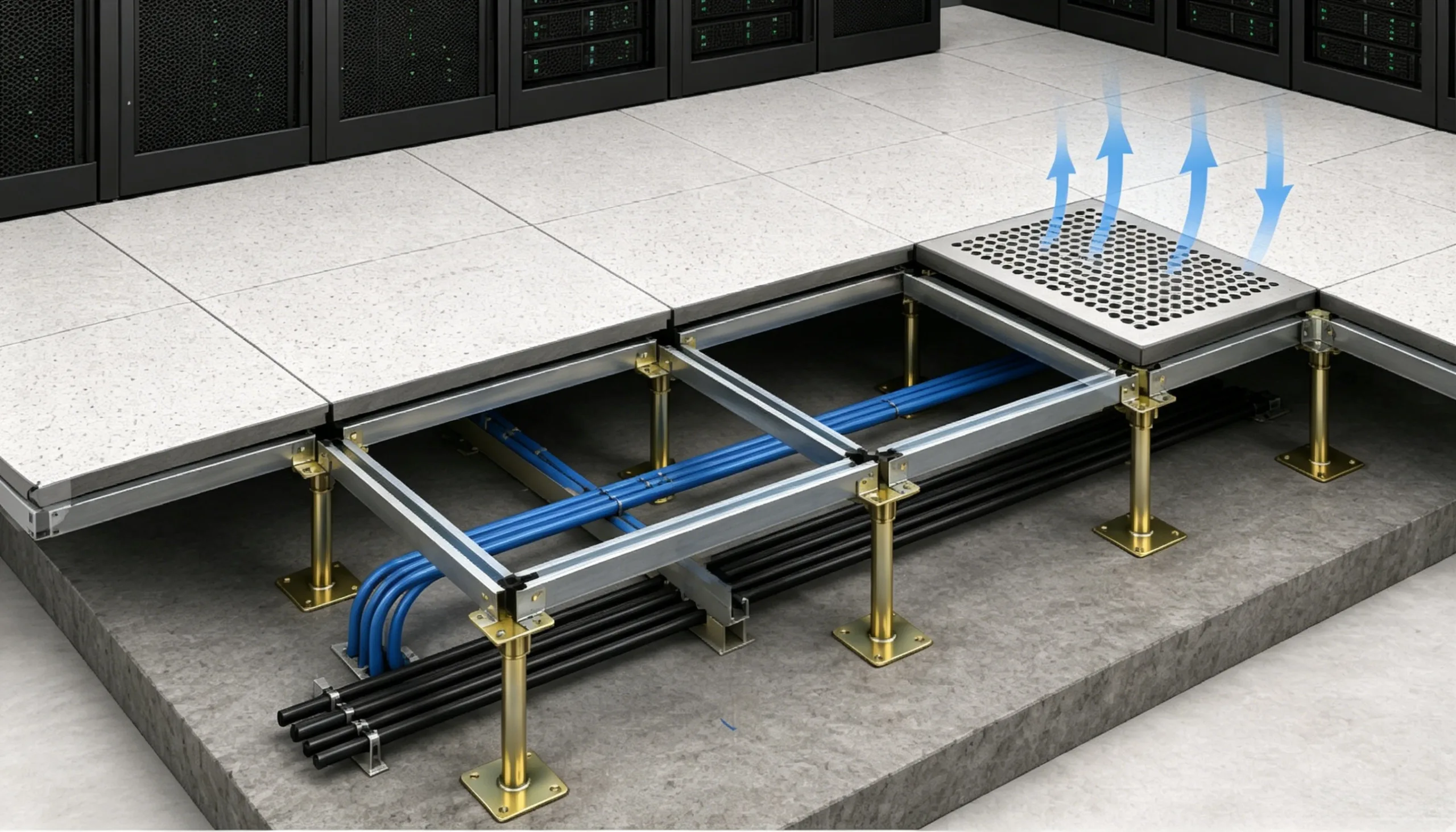
Anti-static Raised Floor: Suitable for computer rooms, microwave communication equipment rooms, stored-program-controlled telephone exchange rooms, mobile communication equipment rooms, satellite ground stations, radio control rooms, television transmitter control rooms, integrated circuit manufacturing facilities, electronic instrument manufacturing workshops, hospital operating rooms, anesthesia rooms, radiology rooms, MRI rooms, and other areas necessitating dust control and electrostatic protection.
Bare-Finish Raised Access Floor: Suitable for commercial office buildings, smart office spaces, and similar applications. The final floor finish is typically carpet tile or LVT.
1.2 Environmental Restrictions
Install raised access floors away from areas that generate dust, oil fumes, or harmful gases, and away from locations where corrosive, flammable, or explosive materials are produced or stored.
2.Environmental Requirements
2.1 Temperature and Humidity Specifications
| Floor Type | Ambient Temperature | Relative Humidity |
| Anti-static Raised Floor | 18~25℃(±2℃) | 50%±10% |
| Bare Finish Raised Floor | 16~36℃(±2℃) | 55%±20% |
3.Operating Precautions
This section sets out general requirements for the daily use and maintenance of raised access floors. Follow the applicable requirements during construction when installing raised access flooring.
3.1 Personnel Access Requirements
All personnel entering areas with raised access floors shall observe the following regulations:
Keep the area clean. Spitting and discarding cigarette butts or other debris are strictly prohibited to prevent contamination of carpet, PVC, or other floor finishes and to reduce fire hazards.
Shoes with nails, spikes, or hard soles are prohibited in anti-static raised floor areas to prevent damage to HPL, PVC, and other surface finishes.
Personnel are recommended to wear shoe covers when entering the area to help keep the floor finish clean.
3.2 Daily Use Requirements
Do not carry out work directly on the raised access floor using sharp or cutting tools, as these may scratch or damage the floor surface.
Handle all items carefully. Do not push or drag objects directly across the floor surface, as this may scratch the protective finish or damage the panels. When construction materials must be transported over installed flooring, provide adequate protection in advance using a protective layer with sufficient thickness, strength, and load-distribution capacity to prevent local deformation, instability, or collapse of the floor panels or support system.
In corridors, entrances, and other busy areas, carefully control concentrated and transportation loads to prevent overloading.
Set heavy items on the raised access floor steadily and without impact to avoid damaging the floor.
3.3 Structural Load Requirements
For long-term heavy loads, or where furniture or equipment imposes a load at a single support point exceeding one-third of the floor system’s allowable load rating, install auxiliary supports at the corresponding locations to prevent floor deformation.
3.4 Work-at-Height Requirements
When performing ceiling installation or other work at height in areas with raised floors, the following regulations shall be observed:
Do not use metal ladders directly on raised access floors. Wooden ladders are recommended, and ladder feet shall be securely wrapped with soft protective material. Inspect the wrapping regularly and replace it promptly if worn or damaged.
Personnel shall not jump directly onto raised access floors from a height, as impact loads may exceed the floor capacity and cause collapse or panel fracture.
3.5 Cleaning and Routine Maintenance
When performing cleaning operations, the following regulations shall be observed (see Special Warning at the end of this section for detailed safety instructions):
Do not use cleaning tools with sharp or cutting edges, as they may damage the floor surface.
Do not wash the floor directly with water or clean it with a wet mop. For routine cleaning, use a dry cloth, dry mop, or another suitable dry-cleaning method.
| Special Warning: Cleaning Safety Instructions
Do not wash or wipe raised access floors directly with water or a wet cloth. Non-neutral cleaners are prohibited. If a neutral cleaner is required for localized stains, use only a controlled amount and remove all residue quickly to prevent liquid from entering the floor joints. Do not use cleaners containing acids, alkalis, or organic solvents. These chemicals may attack the anti-corrosion coating, leading to steel corrosion, aging or warping of PVC finishes, and cracking or delamination of HPL finishes. Prevent cleaning liquids or chemicals from flowing through floor joints into the underfloor space, where they may corrode supports, cables, utilities, or other equipment and affect normal operation. |
3.6 Finish Installation Requirements
When installing carpet tiles or resilient flooring over bare-finish raised access floors, use an environmentally friendly, flexible adhesive such as a non-drying or pressure-sensitive adhesive. Solvent-based adhesives shall not be used, as they may damage the anti-corrosion coating on the steel floor panels.
3.7 Sunlight Protection
Protect finished anti-static raised access floors from direct sunlight, as far as practicable, to prevent premature discoloration and aging of the surface finish.
3.8 Underfloor Utility Restrictions
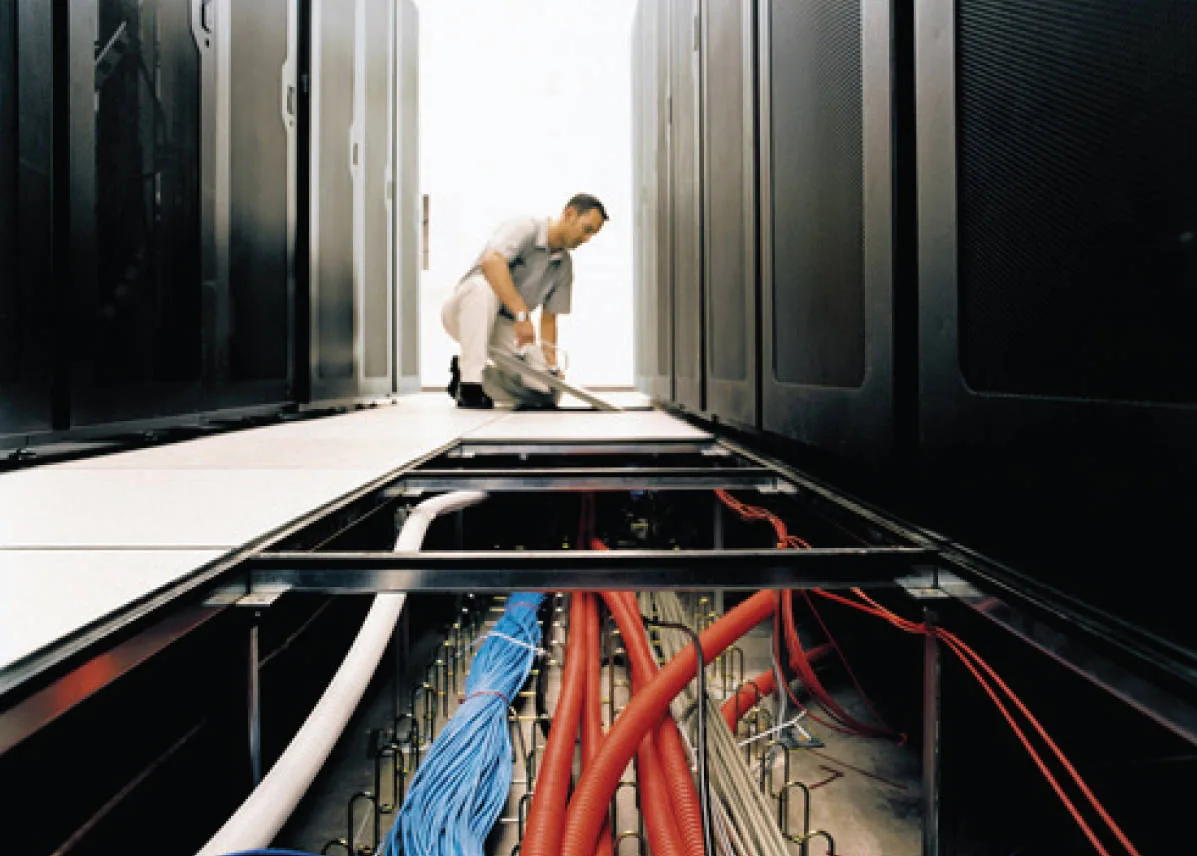
Liquefied-gas lines, fire-water pipes, and similar pipelines shall not be installed beneath the raised access floor.
4.Installation and Construction Requirements
4.1 Construction Prerequisites
Install bare-finish and anti-static raised access floors after the following related works are complete. Concurrent work with other trades should be avoided whenever possible:
Fire protection system installation
Ceiling installation
Wall finishing
Floor-level power and low-voltage cabling
Equipment/data-center cabinet positioning
4.2 Requirements for Concurrent Work
If timeline limitations prevent avoiding concurrent work, do not begin raised floor installation until floor-level power and low-voltage cabling are complete.
4.3 Protection of Completed Work
If the raised access floor has been partially or fully installed but not yet accepted, protect the completed floor during subsequent construction activities before installing final finishes such as carpet. The following requirements apply:
4.3.1 Material and Tool Placement
Do not place tools, equipment, or construction materials with sharp edges directly on the raised access floor, and do not drag, cut, scratch, or hammer on the floor surface. Such actions may seriously damage the epoxy protective coating on bare-finish panels or the anti-static finish on anti-static panels, impairing performance and possibly causing corrosion. The responsible party shall bear any costs for adjustment or replacement resulting from inadequate protection.
4.3.2 Protection During Work at Height
During work at height, follow the requirements of Section 3.4. Inspect protective wrapping on ladder feet regularly and replace it immediately if worn or damaged. The responsible party shall bear the cost of any floor damage resulting from inadequate protection.
4.3.3 Protection During Heavy-Item Handling
When moving heavy items during construction, follow the requirements of Section 3.2, and provide adequate protection. The responsible party shall bear losses resulting from deformation, instability, or collapse of floor panels or supports caused by inadequate protection.
4.3.4 Protection Against Dust and Contaminants
Wall finishing and similar construction activities may generate putty, adhesive, paint, sanding dust, and other contaminants. If such work is carried out after the raised access floor has been installed, cover the floor with plastic sheeting, protective tarpaulin, or similar material that can contain the debris. Leave the floor free of residue after the work is completed. Any additional cleaning required because of inadequate protection shall be the responsibility of the relevant party.
4.3.5 Floor Panel Lifting Control
After installation, if personnel from other trades need to lift floor panels for their work, they shall notify our company’s sales representative or the project manager responsible for the on-site raised floor installation in advance so that appropriate personnel can be arranged to assist.
Any costs arising from panel damage, replacement, or re-leveling caused by unauthorized lifting or construction without prior notice shall be borne by the responsible party.
5.Maintenance and After-Sales Service
5.1 Floor Panel Lifting and Reinstallation
When secondary cabling, network cable inspection, or maintenance of underfloor utilities and equipment requires floor finishes or panels to be lifted, the following requirements shall be observed:
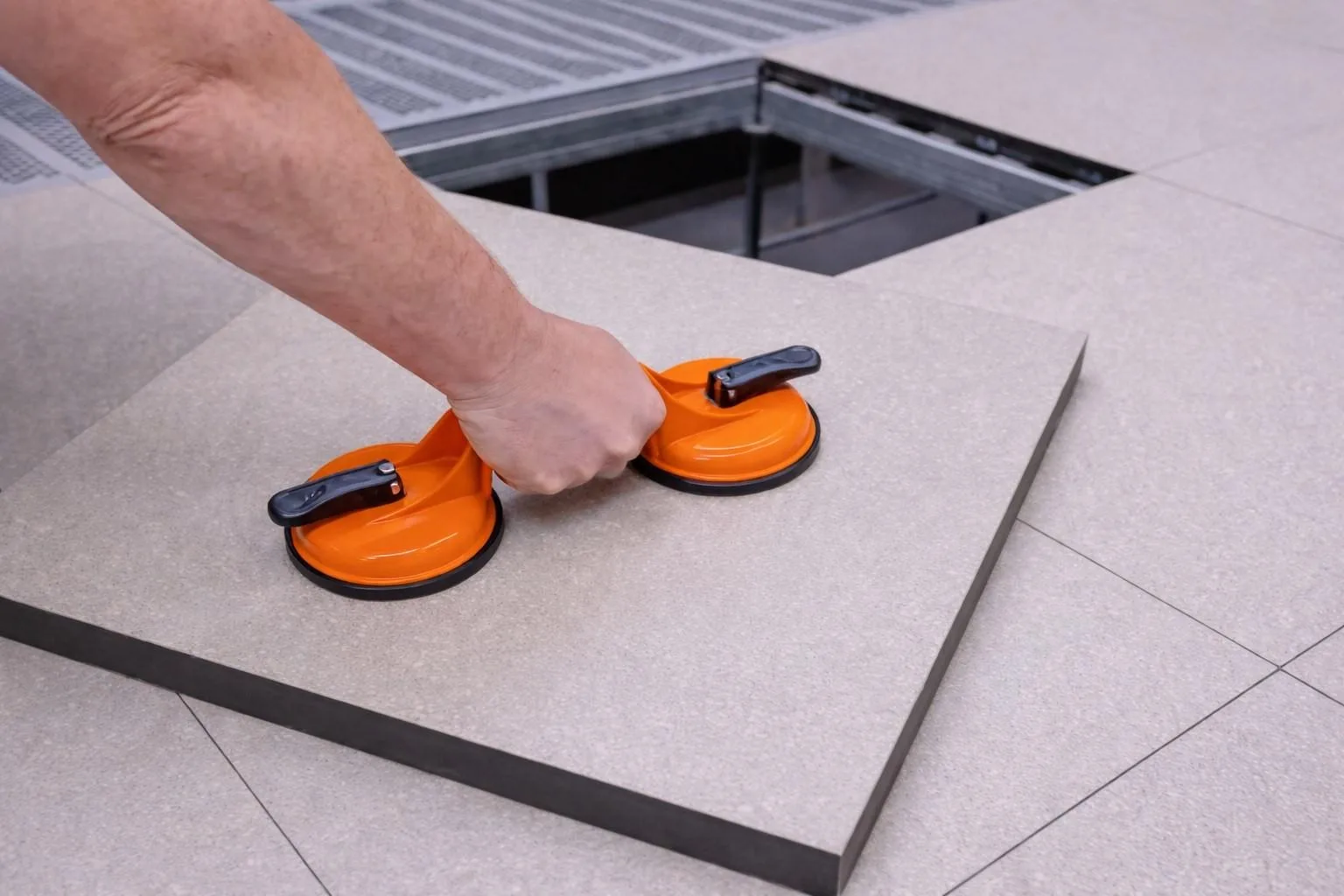
Lift floor panels using a dedicated suction-cup floor lifter. Do not pry panels up with metal tools, as this may damage the panels.
After maintenance, reinstall the panels in their original positions, restore the floor to a uniform level, and tighten the support system locking nuts.
For extensive maintenance or major cabling adjustments, contact our company to arrange professional service.
Handle floor panels carefully when using a dedicated suction-cup lifter. Do not carry a panel while it remains attached to the suction cup, as the panel may detach and cause injury.
Wear protective gloves when removing, reinstalling, or handling cut/special-shaped panels to prevent hand injuries from cut edges.
Unqualified personnel shall not modify or cut floor panels.
5.2 Floor Outlet Maintenance
Before moving or servicing floor outlets integrated with the raised floor, disconnect the power supply and network connections. Live electrical work is strictly prohibited to prevent electric shock or other safety incidents.