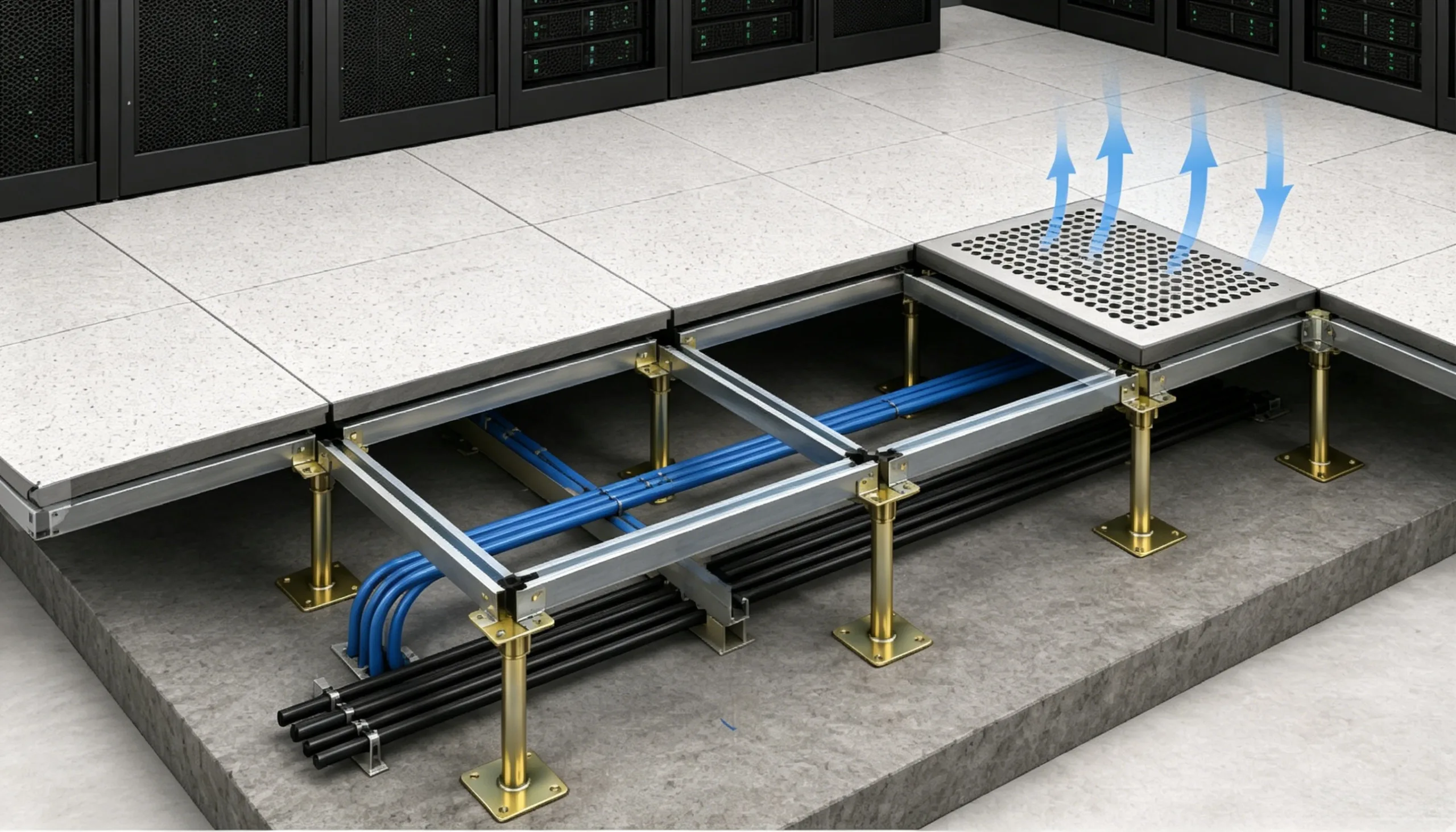
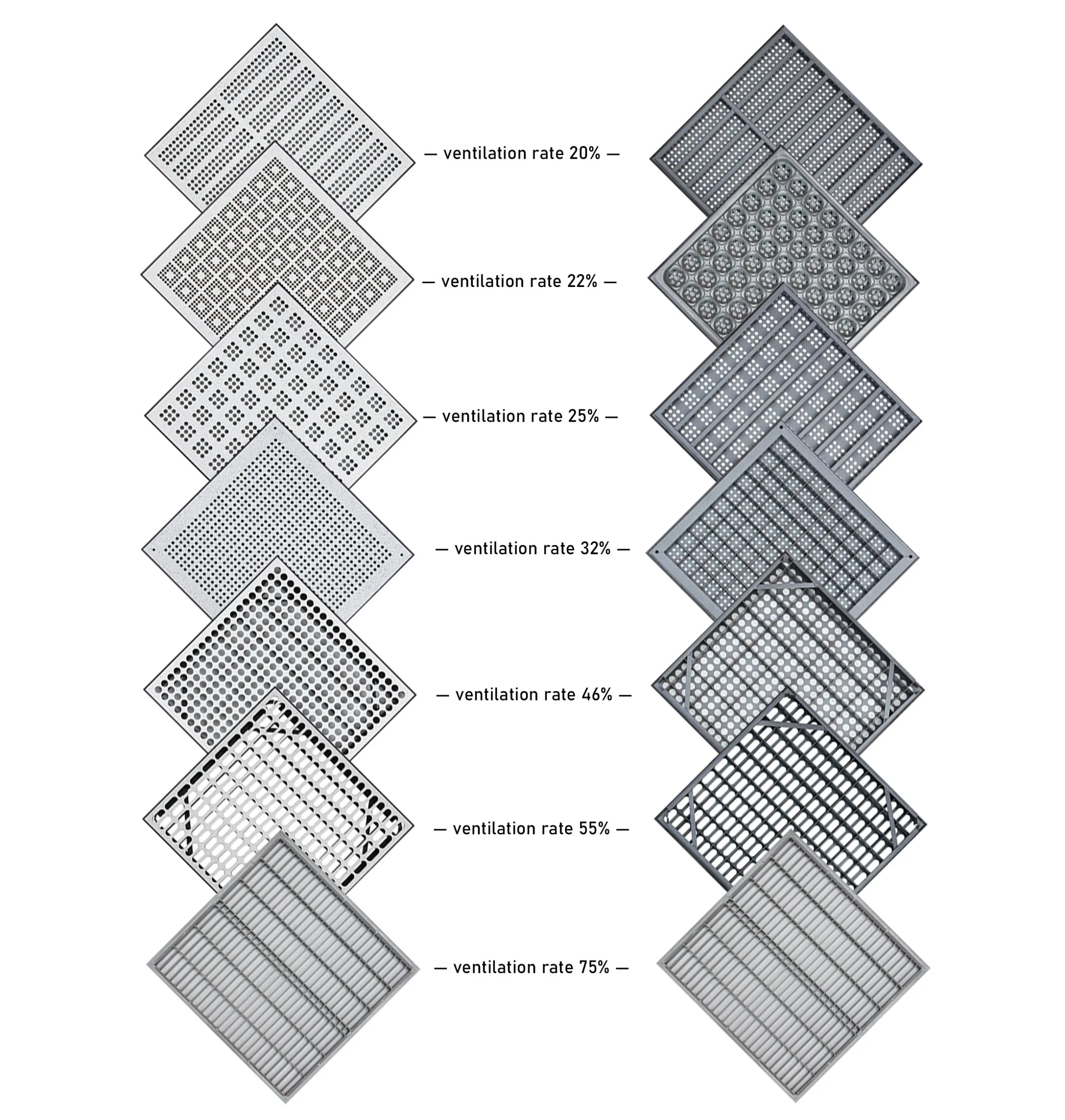
In data centers and office buildings, environmentally friendly composite raised floors (e.g., calcium sulphate core and woodcore) have gradually replaced traditional steel-cement raised floors. The industry generally recommends adopting the EN 12825 standard rather than CISCA for load-bearing testing. The core reason lies in EN’s superior compatibility with the material properties of composite cores, enabled by its testing logic and scenario coverage, which accurately mitigates safety risks such as brittle fracture and delamination.
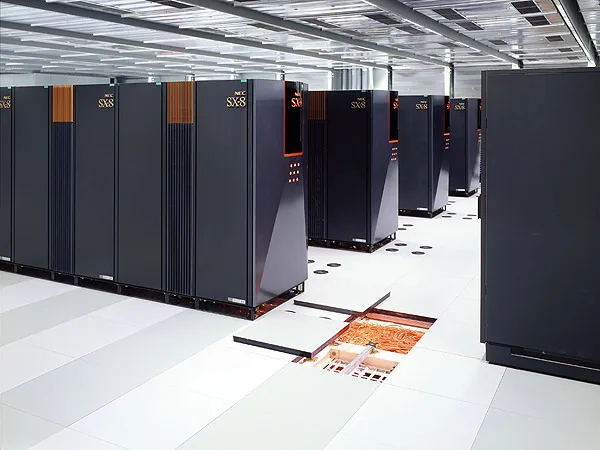
I. Testing Logic
(I) EN 12825
1.Rigorous Load Calculation Logic: First measure the ultimate load-bearing capacity of the floor, then derive the allowable working load using standardized, traceable safety factors (2.0/3.0). This model is specifically designed for brittle materials (with no obvious plastic deformation before failure), ensuring safety redundancy from the root.
2.Comprehensive Testing of Multiple Weak Points: Use a 25mm square indenter to conduct concentrated load tests on three high-stress areas: the center of the floor, edges, and the point 70mm diagonally from the top of the pedestal. It accurately simulates scenarios in which composite core materials are most prone to cracking and delamination in practical use, thereby avoiding risk omission.
3.Strict Control of Long-Term Deformation: Classify deflection under working load into three grades: A (≤2.5mm), B (≤3.0mm), and C (≤4.0mm), with permanent deformation limited to ≤0.5mm. Effectively suppress long-term hazards, such as brittle creep in calcium sulphate cores and moisture-induced expansion in wood cores, ensuring system stability.
(II) CISCA
1.Vague Safety Factor: Directly specify working loads (e.g., 4450N/1000lb) without requiring ultimate-load testing, resulting in a lack of a quantitative basis for safety redundancy. It is only suitable for steel-cement floors with excellent plasticity. Brittle calcium sulphate cores and moisture-absorbent wood cores are prone to the problem of “superficial compliance but insufficient safety near the failure state.”
2.Single Test Scenario: Focus on single-point testing with a 1-inch (25.4mm) square indenter and low assessment standards for weak areas, such as edges and pedestals. Fail to capture structural risks, such as edge chipping and panel delamination, in composite core materials.
3.Lack of System-Level Assessment: Although the deflection limit (2.54mm) and permanent deformation limit (0.25mm) are strict, they address only short-term single-point loading and do not account for overall system failure scenarios. It is difficult to assess chronic safety hazards, such as long-term creep in wood cores and interlayer separation in calcium sulphate cores.
II. Material Compatibility
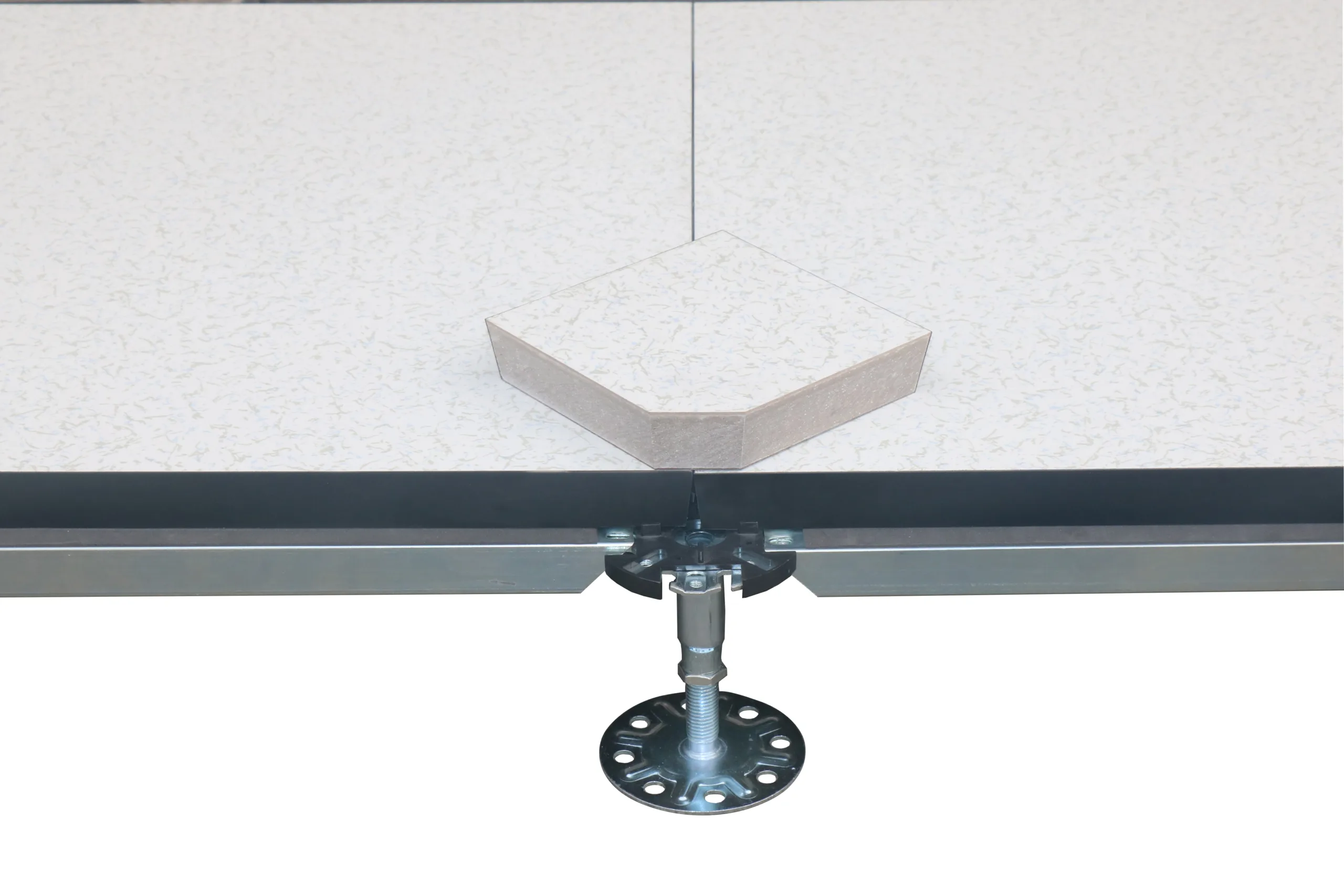
1. Calcium Sulphate Core
Its core risk is “unexpected brittle fracture without warning.” The combination of “ultimate load + safety factor + multi-weak-point testing” in EN 12825 can accurately quantify the true safety margin, avoiding the brittle fracture risk that arises from CISCA’s focus on “only working deflection while ignoring breaking strength.”
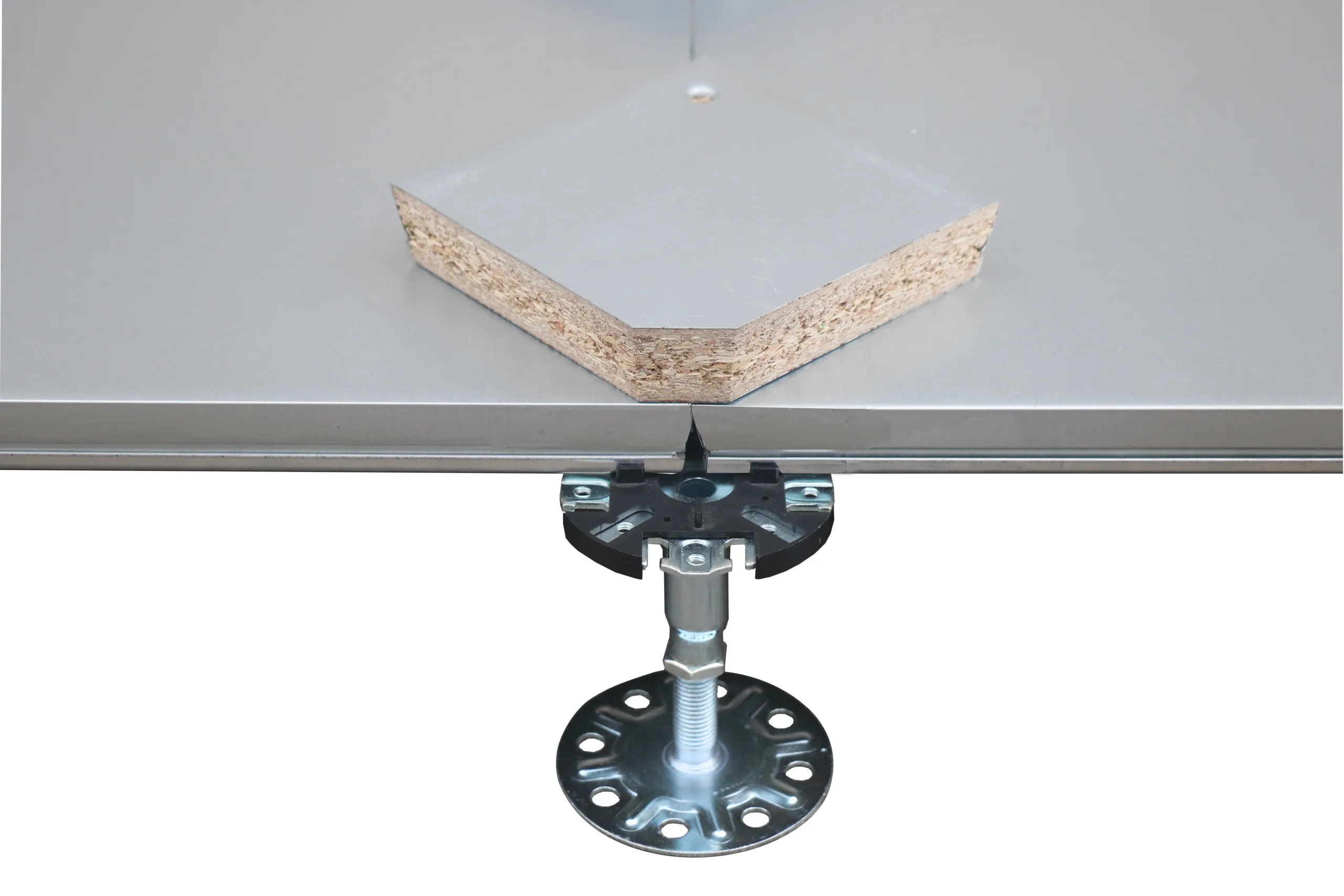
2.Wood Core Material
Prone to moisture absorption, expansion, long-term creep, edge chipping, and other issues. The system-level testing, long-term deformation monitoring, and multi-position loading design of EN 12825 can accurately identify stress weak points in woodcores at pedestals and edges; in contrast, CISCA’s single-point short-term testing masks the long-term performance-degradation risks of woodcores.
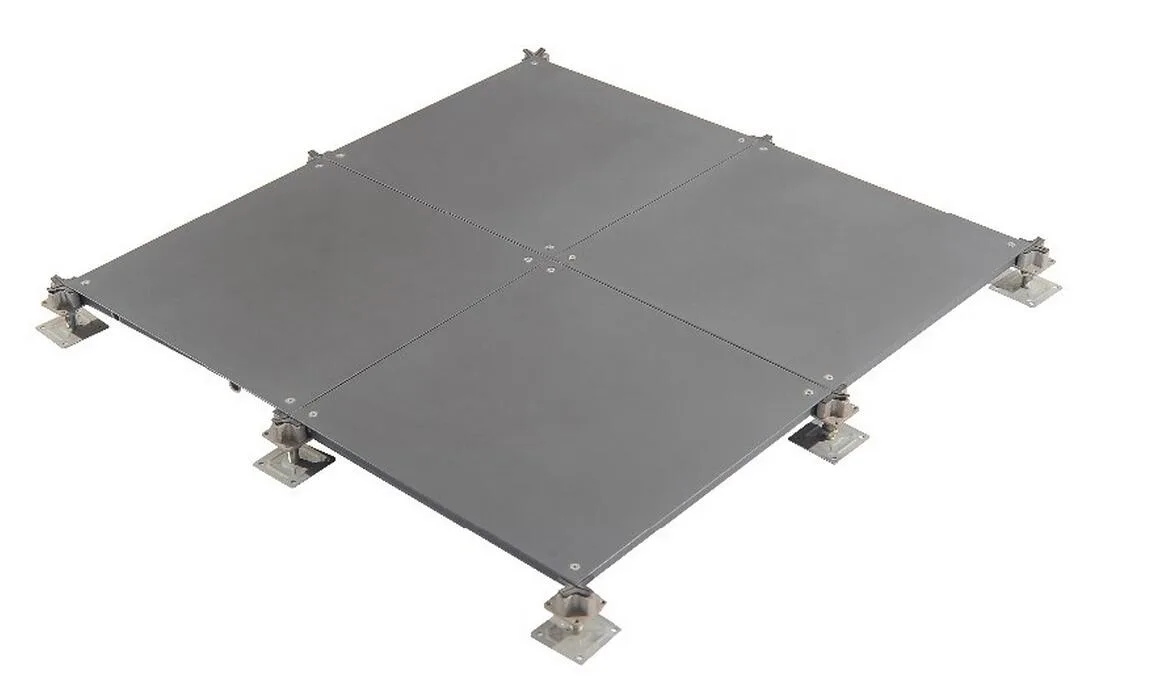
3.Steel Cement Core
Due to the obvious deformation warning before failure, it is well aligned with CISCA’s testing logic, but it is not suitable for composite core scenarios.
III. Summary
For brittle/composite core materials such as calcium sulphate and woodcore, the EN 12825 standard adopts a closed-loop design of “ultimate load quantification + standardized safety factor + full-scenario weak-point testing + long-term deformation control.” It can comprehensively and accurately assess the true safety performance of the floor, avoiding core risks such as brittle fracture, delamination, and long-term creep from the design perspective. In contrast, the CISCA standard, due to its mismatch between testing logic, scenario coverage, and composite core material properties, cannot meet the strict requirements for floor stability in scenarios such as data centers and office buildings.
Currently, EN 12825 has become the mainstream certification standard for composite raised floors worldwide, and its versatility and safety are better aligned with the high-reliability requirements of modern buildings for infrastructure.