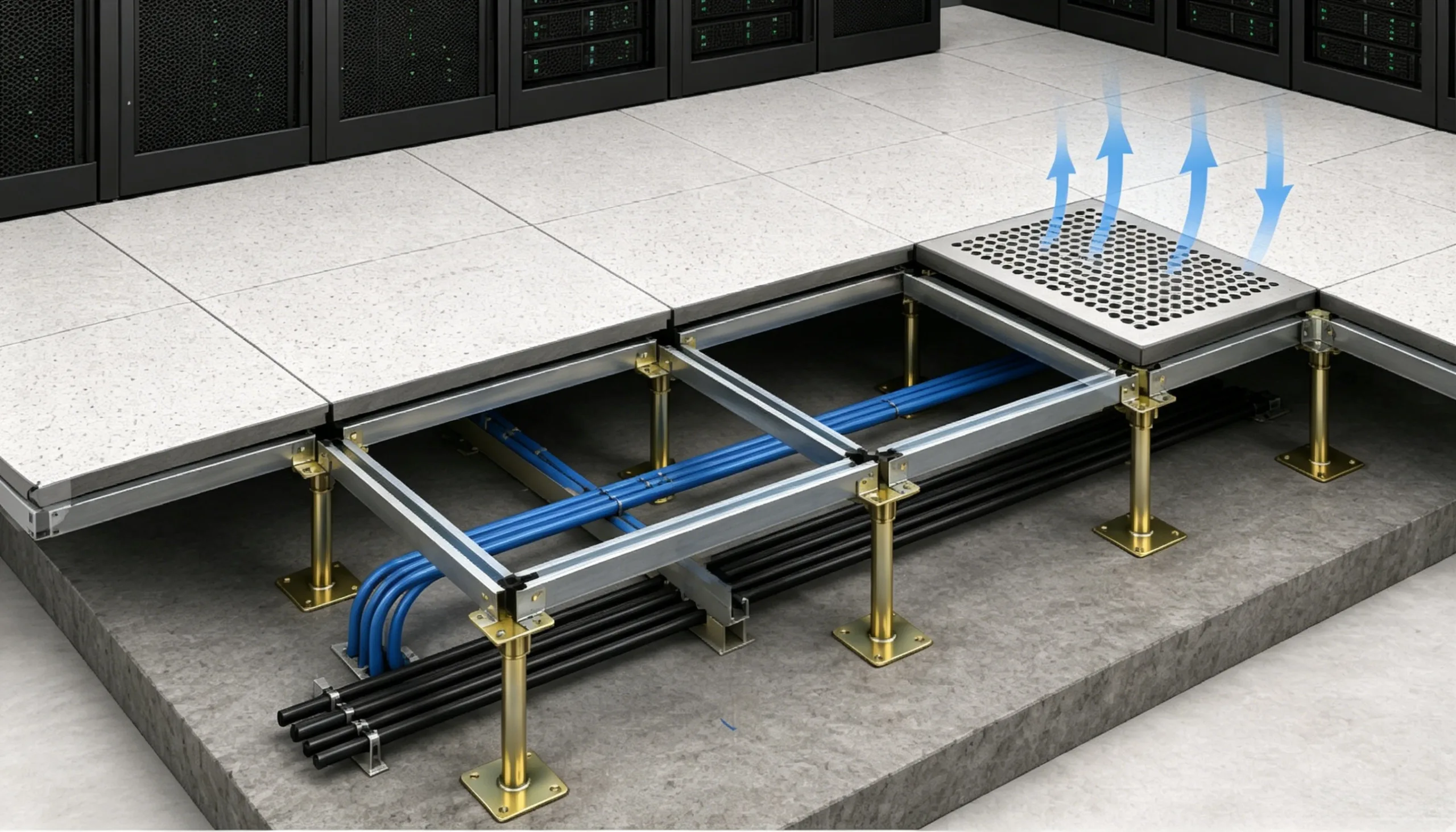
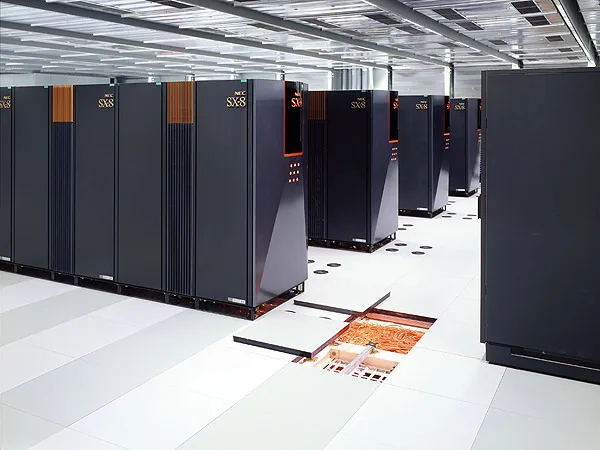
Perforated raised floors are movable raised floors with perforated or grid ventilation structures. Their core function is underfloor airflow and heat dissipation in computer rooms. They are also compatible with anti-static flooring and underground cabling, and can be mixed with solid anti-static floors. They are specialized supporting materials for data centers, computer rooms, and cleanrooms.
Ⅰ.Core Functions
1.Computer Room Cooling and Air Supply:
Cool air from the air conditioner enters the static pressure chamber under the floor and is blown upwards through the perforations in the panels to dissipate heat from the server racks. Dense ventilation panels are installed in front of cold-aisle racks, while solid panels are used in hot aisles for precise temperature control.
2.Concealed Cable Management:
The raised floor layer conceals power and data cables, network cables, and air conditioning ducts, facilitating future maintenance and expansion.
3.Static Electricity Discharge Protection:
The panel surface has an anti-static layer , reducing the risk of electrostatic discharge damage to precision equipment.
4.Cleanroom Airflow Circulation:
The cleanroom achieves vertical laminar flow, with air returning from under the floor to maintain the cleanliness level (Class 100/Class 1000).
Ⅱ.Mainstream Material Classification
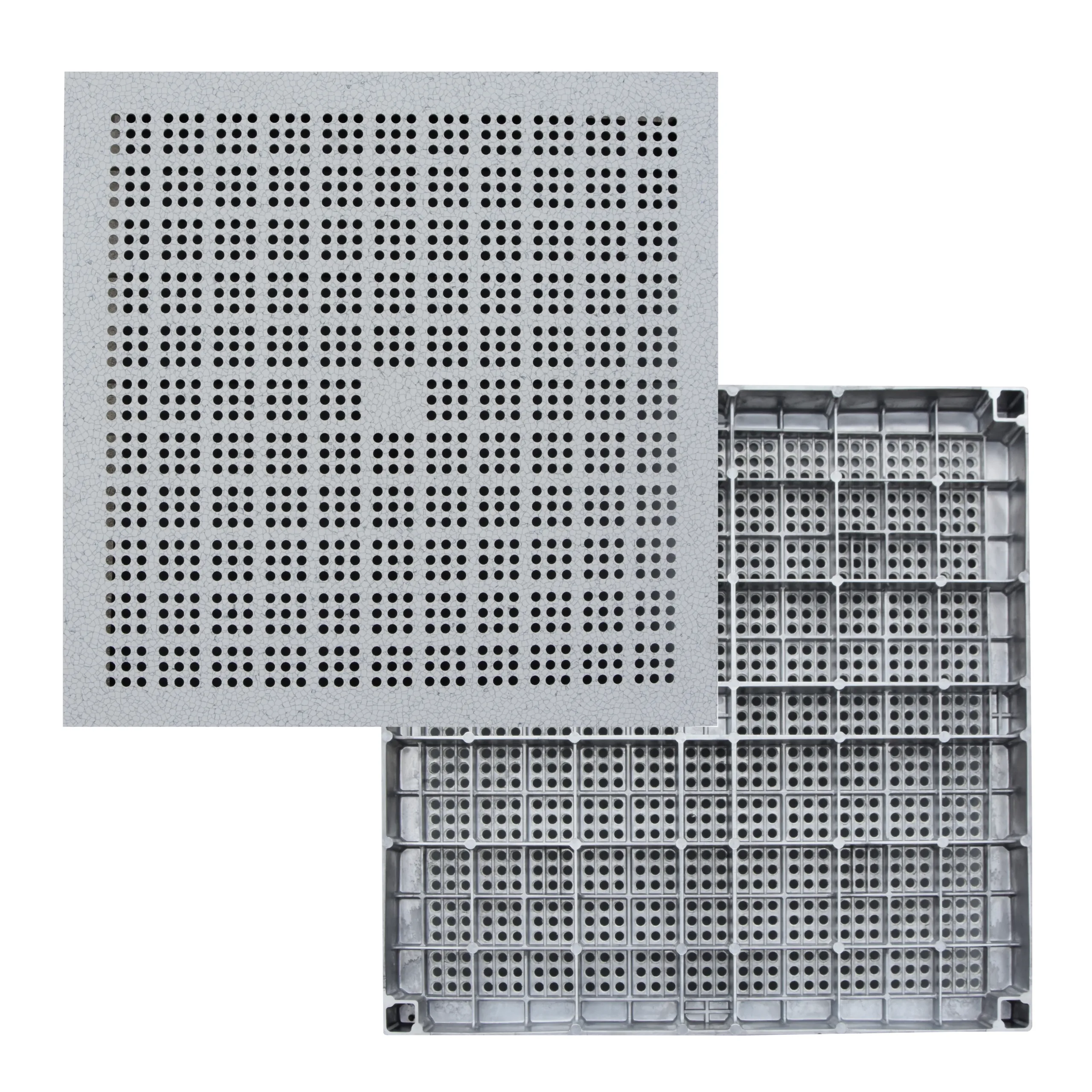
1.Steel Perforated Panel
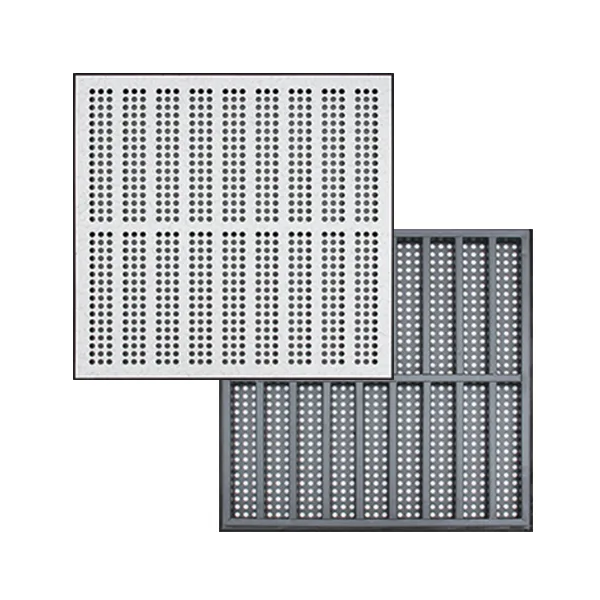
- Structure: Steel plates with perforations, reinforced with a steel frame on all sides.
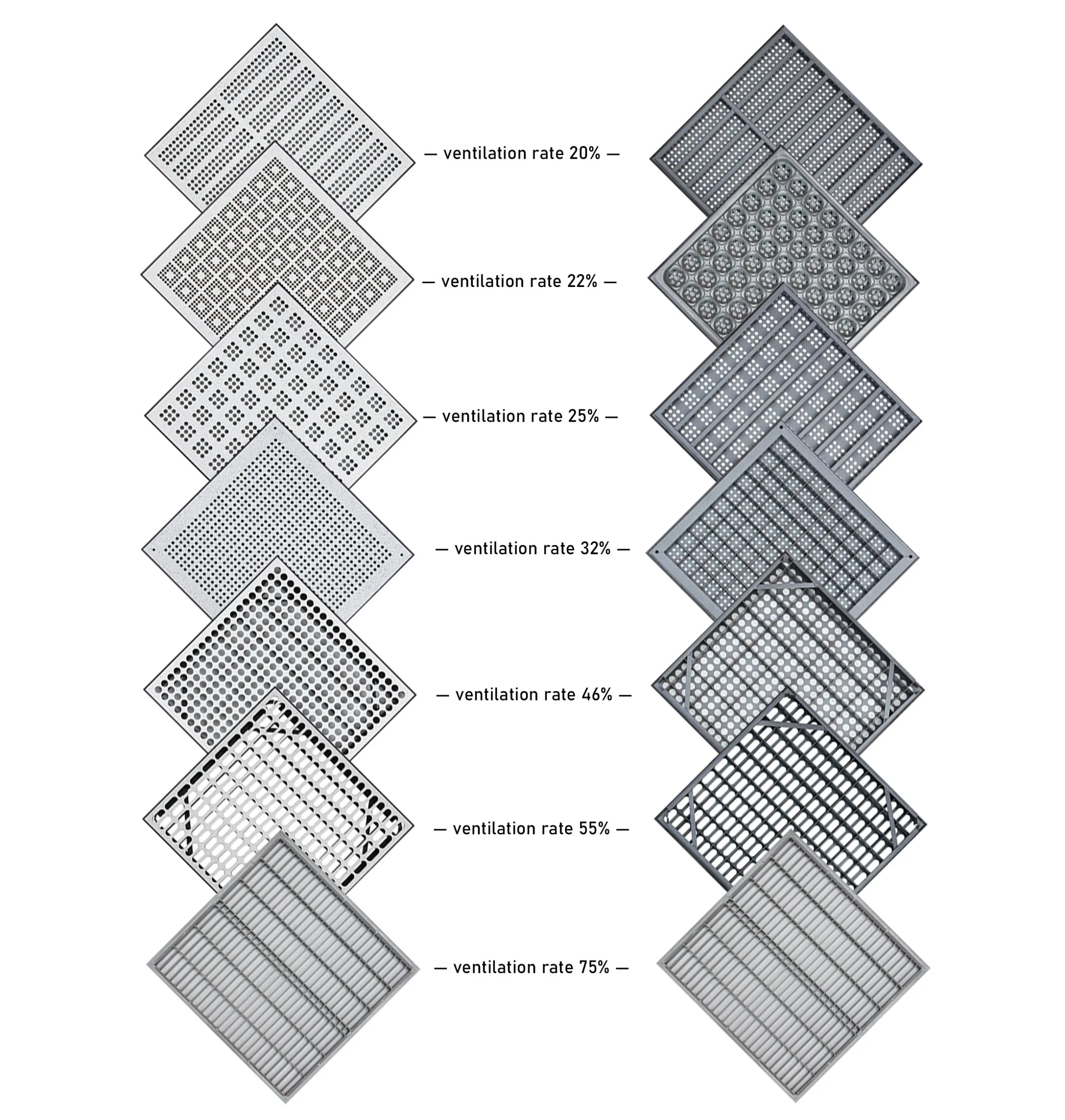
- Ventilation Rate: 20%~70% selectable
- Advantages: Strong load-bearing capacity, high cost-effectiveness, A1-grade non-combustible, good interchangeability, and suitable for conventional computer rooms, monitoring rooms, and low-voltage electrical rooms.
- Disadvantages: Prone to oxidation in humid environments and not recommended for highly clean workshops.
2.Aluminum Perforated Raised Floor
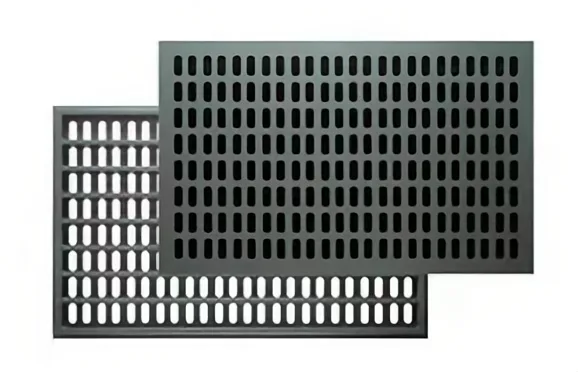
- Structure: Integrated die-cast from ADC12 aluminum ingots, with back reinforcement ribs and overall perforation or grille design.
- Ventilation rate: 15%~35%, uniform perforations, no shedding
- Advantages: Lightweight, waterproof, corrosion-resistant, dust-free, permanently stable in anti-static performance, and recyclable.
- Applications: Semiconductor cleanrooms, pharmaceutical laboratories, high-humidity computer rooms, and electromagnetic shielding rooms.
- Disadvantages: Higher cost
Ⅲ.Key Technical Parameters
1.Standard Size:
Mainstream 600×600mm; also available in 500/800mm custom sizes, thickness 32/35/40/50mm
2.Ventilation Rate Selection Reference
Ordinary small and medium-sized computer rooms: 25%~40%
High-density server or supercomputing rooms: 50%~70% grille type
Cleanroom: 20%~30% Round hole type
3.Loading capacity:
Most steel perforated panels are designed for concentrated loads ≥4450N and uniformly distributed loads ≥1000kg/㎡, and the cabinet will not deform after long-term placement. Aluminum perforated panels can achieve a higher load capacity, such as a 1500kg concentrated load.
4.Fireproof:
Class A non-combustible.
Ⅳ.Typical Application Areas
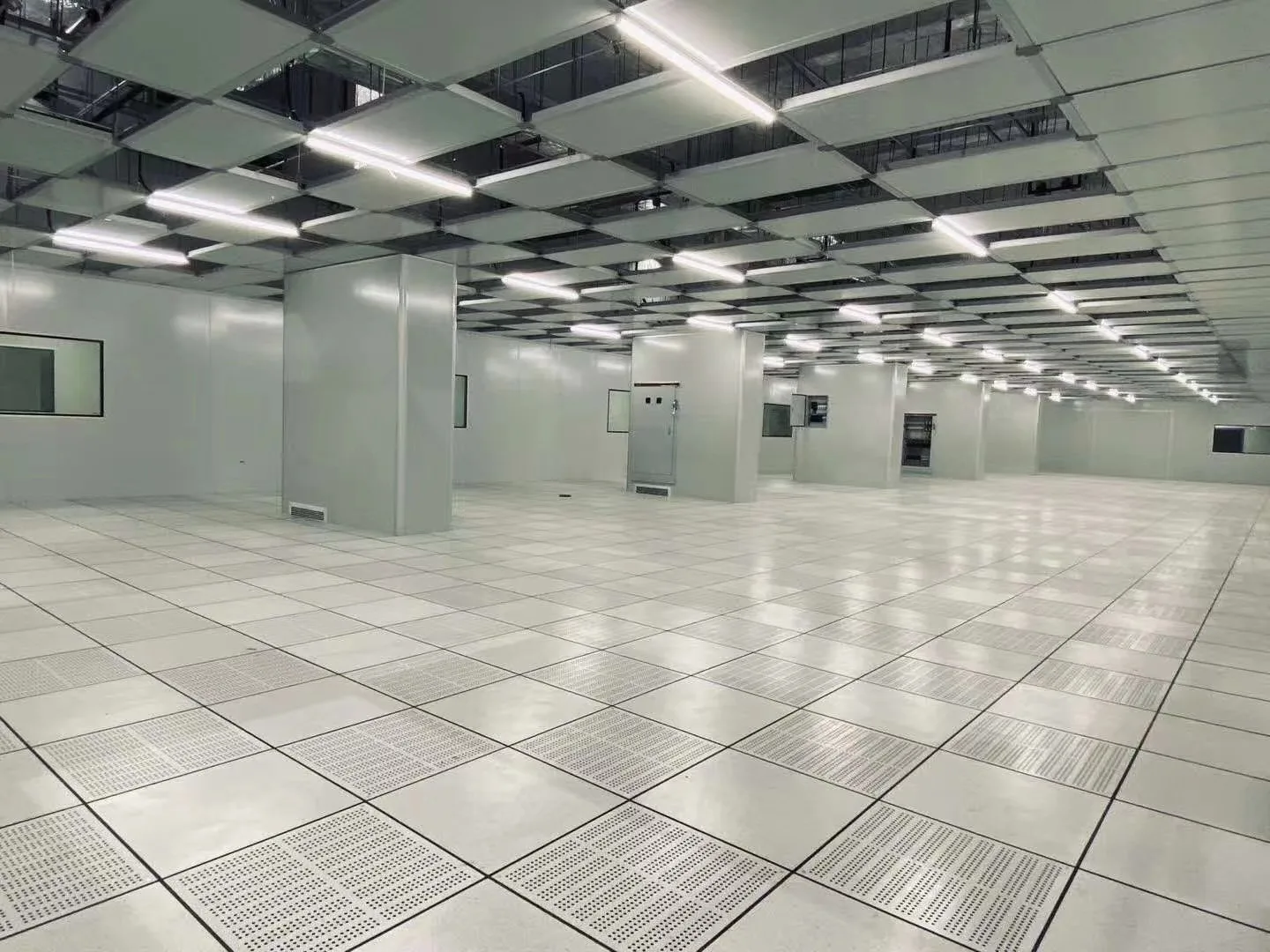
- Data centers, server rooms, and IDC server rooms
- Banks, power dispatching, and government monitoring centers
- Semiconductor, chip, and electronic cleanrooms
- Pharmaceutical laboratories, testing laboratories, and communication control rooms
VI.Installation and Matching Points
1.Layout:
Densely arrange ventilation panels in the cold aisle area of the server rack; use solid anti-static flooring in the hot aisle and passageways;
2.Elevation Height:
For under-supply air in server rooms, it is recommended to elevate the floor by ≥300mm to ensure sufficient airflow in the bottom static pressure chamber;
3.Ground Requirements:
The base surface should be flat, with moisture content <8%, and moisture-proof treatment should be done in advance;
4.Grounding:
All metal supports and floor edges should be connected in series for grounding to ensure smooth static electricity discharge.
VII. Daily Maintenance
- Avoid scratching the anti-static surface layer with sharp, hard objects, which may damage its conductivity.
- Regularly clean the dust under the board to prevent the holes from becoming clogged and affecting ventilation.
- For damp computer rooms, aluminum alloy should be the preferred material, and the anti-rust layer of the bracket should be checked regularly.