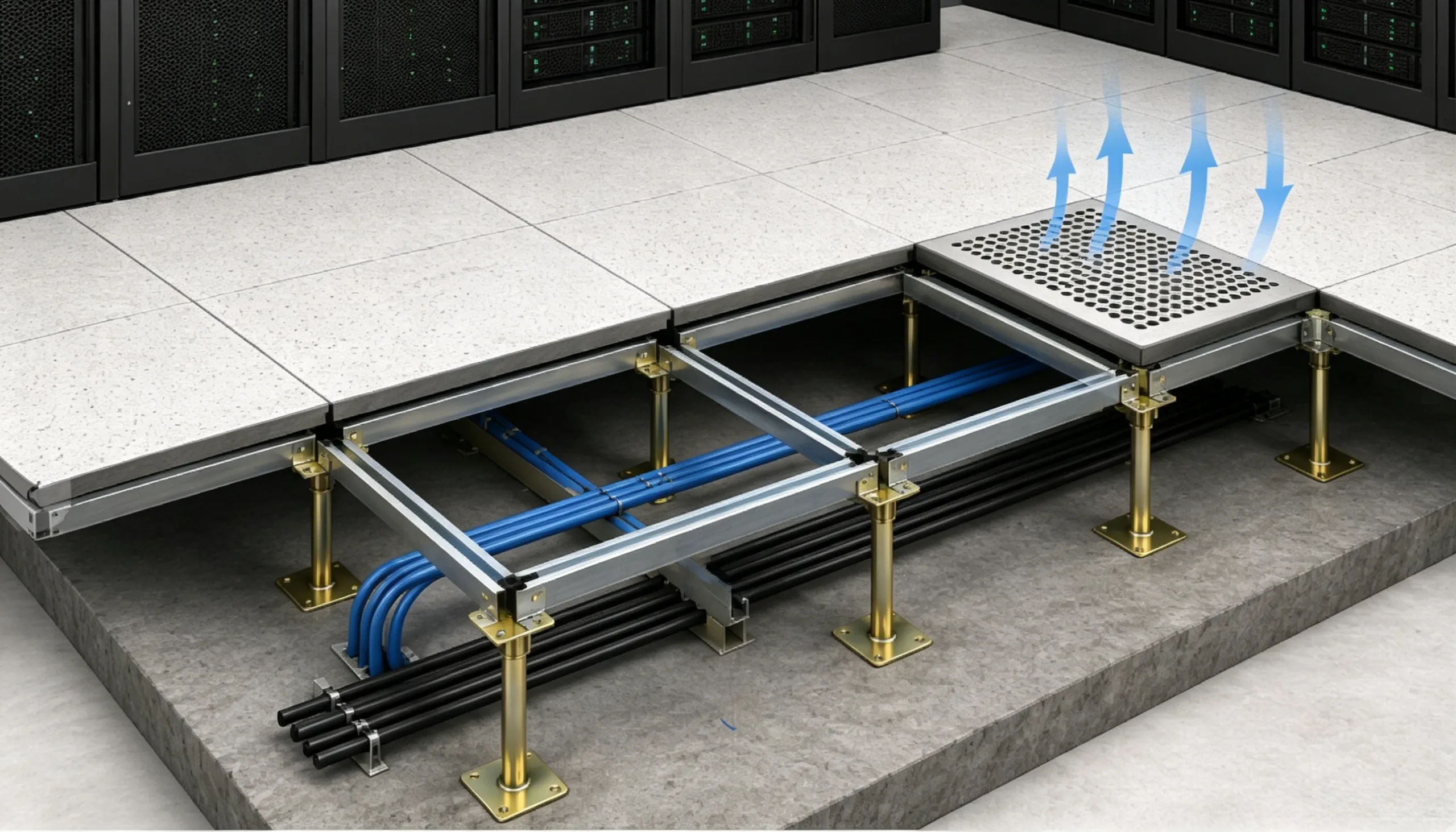
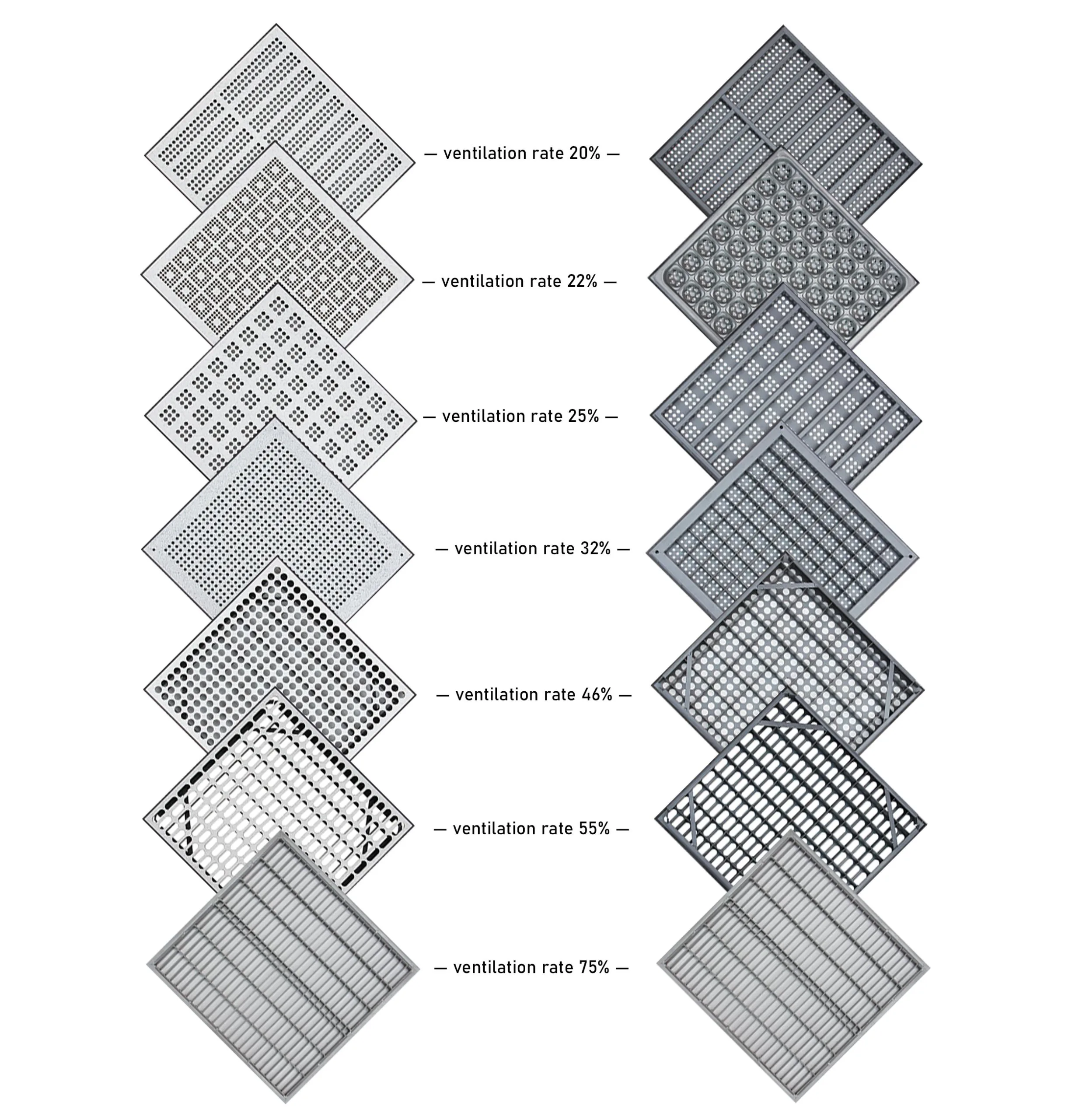
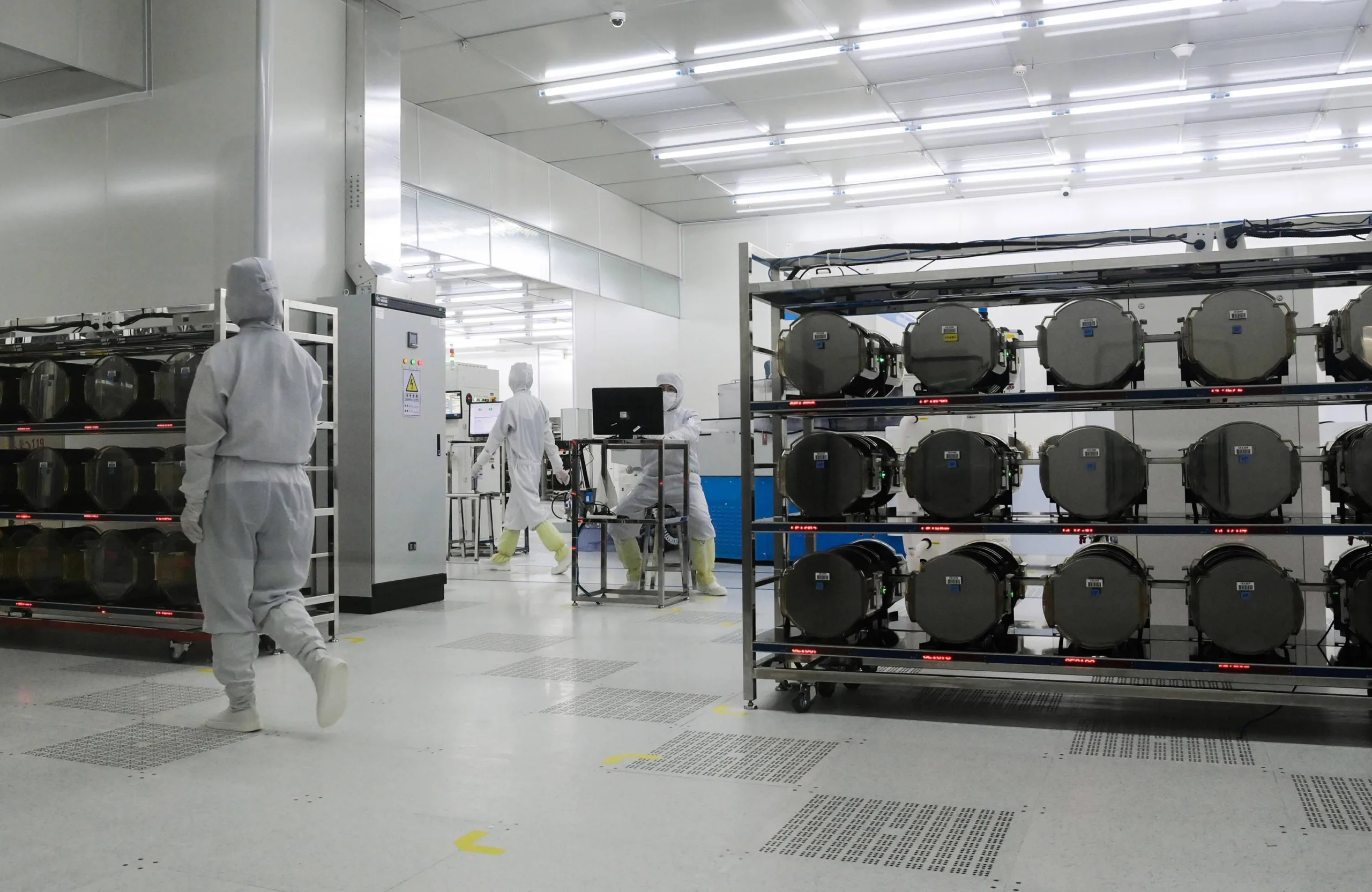
Aluminum raised floor is one of the most widely used raised floor types in high-cleanliness environments such as semiconductor and precision engineering facilities. Compared with other raised floor types, aluminum raised floor offers a strong balance of light weight, high strength, corrosion resistance, and recyclability, providing a favorable trade-off among dimensional accuracy, airflow compatibility, and long-term maintenance cost.
1.General
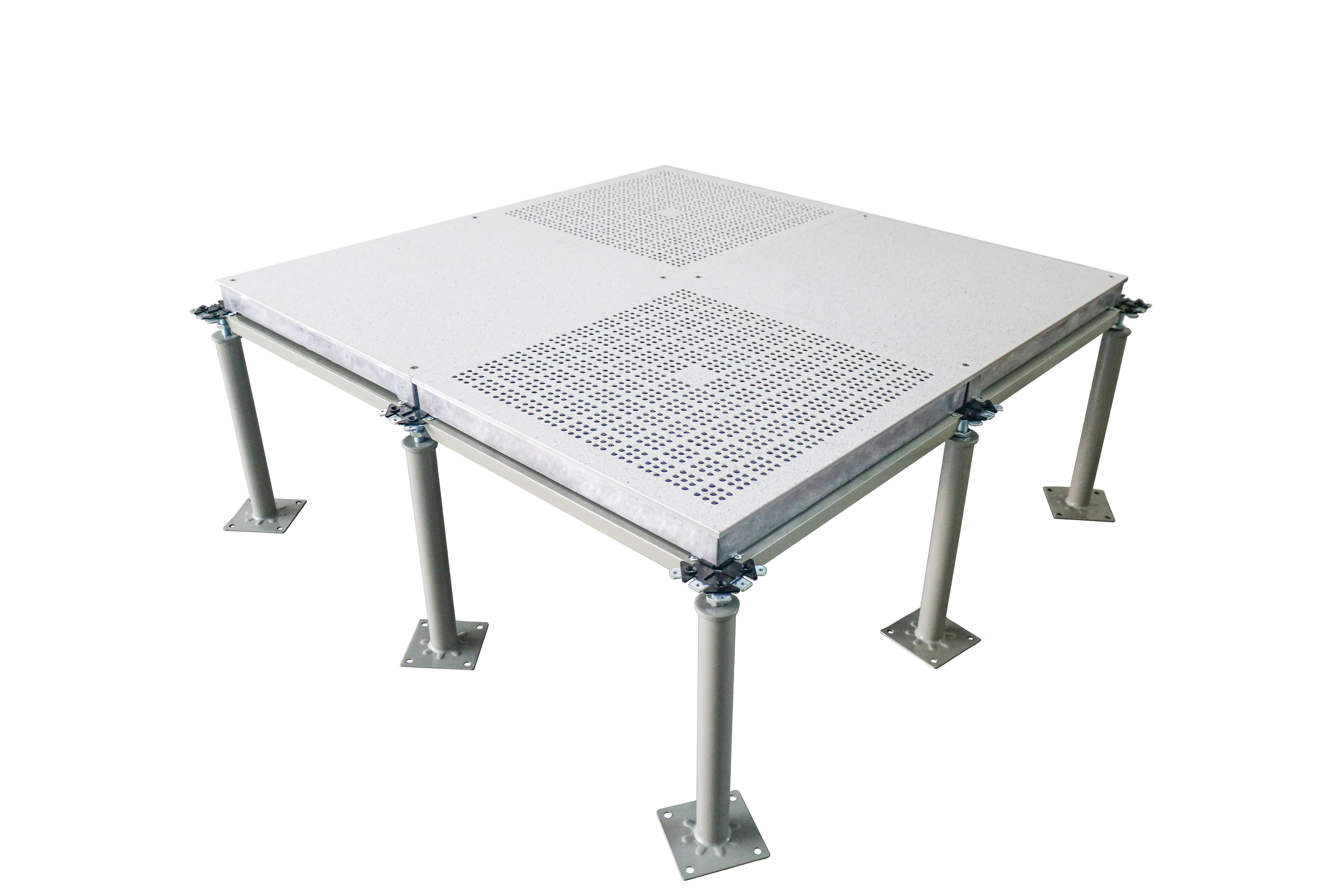
The aluminum raised floor is made from die-cast aluminum alloy ingot (ADC12), with each panel formed in one piece by a high-pressure casting machine using a patented design that delivers high dimensional accuracy. The system consists of panels, pedestals, and stringers; the cavity formed between the floor and the original slab accommodates pipes, cables, and airflow channels.
2.Raised Floor Panel
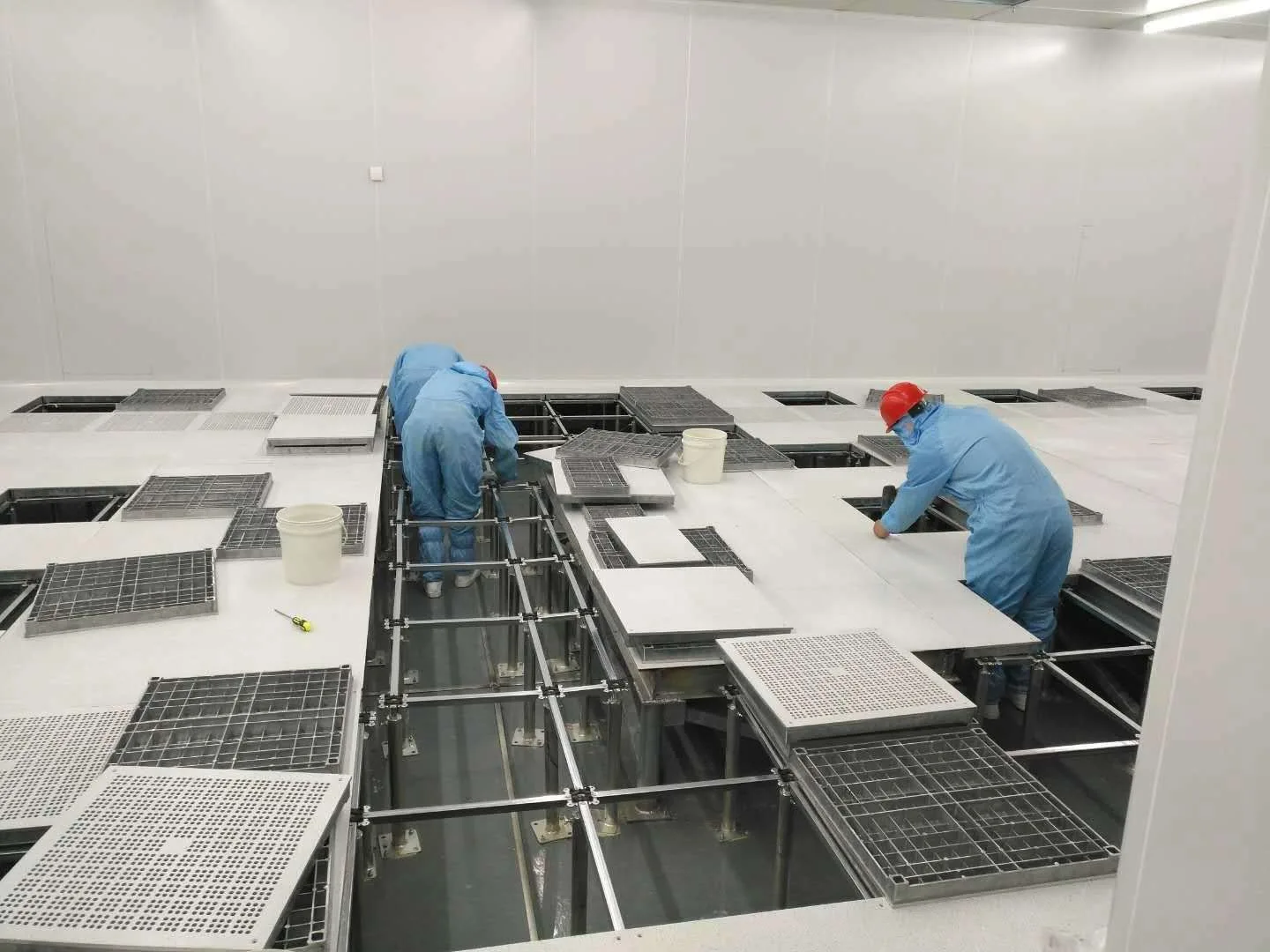
Aluminum floor panels are available in solid, perforated, and window types, which can be combined based on air supply/return and equipment observation needs. This structural flexibility is a defining advantage of aluminum raised floors over other materials. Floor surfaces can be paired with anti-static coverings and coatings, commonly finished with epoxy powder or nickel-chrome coating, balancing wear resistance with static dissipation performance.
3.Under structure
Pedestals are available in a range of tube diameters, with heights from 150mm to 2,500mm, to accommodate varying cavity-height requirements. In taller cavities or special load zones—such as along walls, return air channels, or transportation channels —you can add a bracing system for extra stability. When larger pipework or heavy equipment needs to be accommodated under the floor, and the standard stringer span cannot meet installation requirements, a steel beam system can be used instead: a general beam system covers a given span in one direction. In contrast, a heavy-duty beam system can reach spans as large as 1200×1200mm, 1800×1800mm, or even 2400×2400mm — suitable for large unsupported installation spans.
4.Performance
The patented structural design of aluminum raised floors combines lightweight construction with high load capacity, excellent rolling performance for areas with frequent forklift or cart traffic, and good fire resistance to meet the structural safety requirements of clean facilities. For anti-static performance, the surface anti-static layer works together with the overall grounding system to channel static charge from personnel and equipment into the grounding network, preventing electrostatic discharge (ESD) damage to sensitive components. Pedestals, stringers, and the grounding network should form a complete, low-resistance loop, and a regular testing regime should be established, since coating performance degrades over time with usage and humidity changes.
5.Equipment and Cable/Pipe Layout
The cavity space of aluminum raised floor provides a concealed yet maintainable routing channel for power lines, signal cables, gas pipes, and cooling water pipes. Power and signal lines should be physically separated or shielded to avoid electromagnetic interference with precision equipment signals; pipe routing and maintenance access should be planned, with flexible interface points reserved for equipment that is frequently repositioned, such as semiconductor process tools or pharmaceutical filling machines. This “concealed but accessible” approach allows equipment relocation or production line reconfiguration by lifting only the relevant panels, significantly shortening production-halt renovation periods.
6.Installation and Acceptance
Key installation points include: measuring and leveling the base surface, positioning pedestals per design spacing with verticality control, securing stringer connections to form a stable grid, installing panels with tight joints, sealing pipe penetrations, and conducting grounding system continuity testing after installation. Acceptance should cover both structural performance (levelness, verticality, on-site load and stability testing) and functional performance (anti-static resistance testing, joint sealing inspection, airflow organization verification), along with verification of material certificates, fire ratings, and environmental certification documents against the design selection requirements. Retain complete test records for future traceability.
7.Routine Maintenance and Common Issues
Routine maintenance should include regular inspection for panel looseness or deformation, periodic anti-static resistance testing, use of compatible cleaning agents, proper panel reseating and seal restoration after maintenance, and a cavity pipe/cable log to reduce investigation costs during future renovations. Common issues — such as joint step differences from slight pedestal displacement, anti-static performance decline from coating wear, disorganized cavity pipe layout, and loosened connections causing noise — can generally be identified and addressed early through regular testing and disciplined maintenance practices, rather than only after equipment anomalies occur.
Conclusion
With its combination of lightweight design, high strength, corrosion resistance, adjustable ventilation rate, and reliable anti-static performance, aluminum raised floors have become a mainstream choice for electronics/semiconductor and precision engineering clean rooms, as well as equipment areas in certain pharmaceutical and medical clean rooms. From structural selection and support system design to installation, acceptance, and long-term maintenance, each stage affects cleanliness control performance, equipment operation, and future renovation—selection decisions should be tailored to the specific process scenario.